
KCAO Deputy Executive Director Glenda Stephens Named CalCAPA Staff Member of the Year
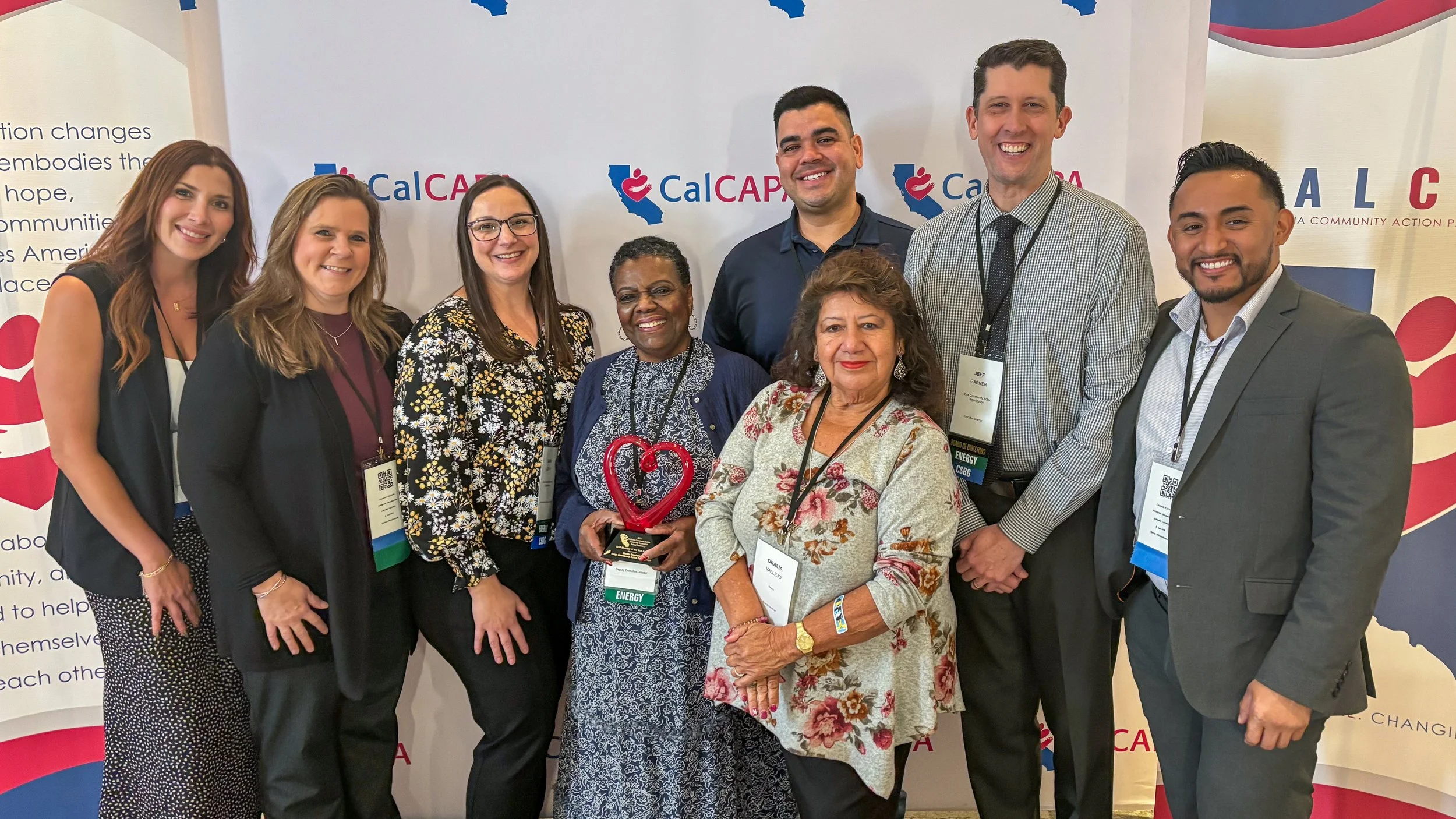
KCAO Deputy Executive Director Glenda Stephens has been named the Staff Member of the Year by the California Community Action Partnership Association, an honor presented during the 2025 CalCAPA Conference held in early November. The annual award recognizes one Community Action staff member statewide for exceptional leadership, service, and commitment to reducing poverty in California.
Stephens said the recognition came as a complete surprise.
“I didn’t even know I was nominated,” she said. “They started reading a bio, which I didn’t even know they had, and it dawned on me they were talking about me. I definitely felt honored and privileged to be recognized in that way.”
The CalCAPA Conference brings together public and private Community Action Agencies from across the state to exchange ideas, participate in workshops, and strengthen strategies that support families and communities. Stephens said the gathering plays a critical role in aligning agencies around shared goals.
“CalCAPA is where we come together on one accord,” she said. “We glean from each other, we encourage each other, and we learn from what other agencies are doing. That’s what makes the conference meaningful.”
During her decades with KCAO, Stephens has contributed to several major initiatives. One she recalls most fondly is the teen parenting childcare program previously offered at Hanford and Lemoore high schools. The on-campus program, which operated throughout the 1990s and early 2000s, helped teen parents remain in school by providing childcare and support services.
“That program was very special and dear to my heart,” Stephens said. “Knowing that just because a student had a baby, their life didn’t stop. That there was support, and people who would help them stay in school and build a good life for their children, that mattered.”
Stephens said this year’s CalCAPA Conference felt especially important as Community Action Agencies continue navigating federal funding uncertainties, staffing impacts, and the lingering effects of government shutdowns. Despite the challenges, she said the conference underscored the resilience and unity of the Community Action network.
“To have all the Community Action Agencies in one location, talking about what we do and why we do it, encourages us to keep working toward our goals,” Stephens said. “We share ideas, we uplift each other, and we help each other keep going.”
She said that sense of statewide solidarity is essential to the work ahead.
“That sense of solidarity,” Stephens said, “is what makes Community Action Agencies resilient.”
